Free: 30 calorie-cutting recipes + a 7-day plan → Get the guide





Ways to Improve Eyesight Naturally: 5 Foods & Herbs Backed (or Debunked) by Science

By Matthew & the Natural Healthier You team
Can you improve your eyesight naturally? While foods and herbs cannot reliably replace prescription glasses or contacts, the right nutrients and healthy habits can help support your eyes and overall visual health.
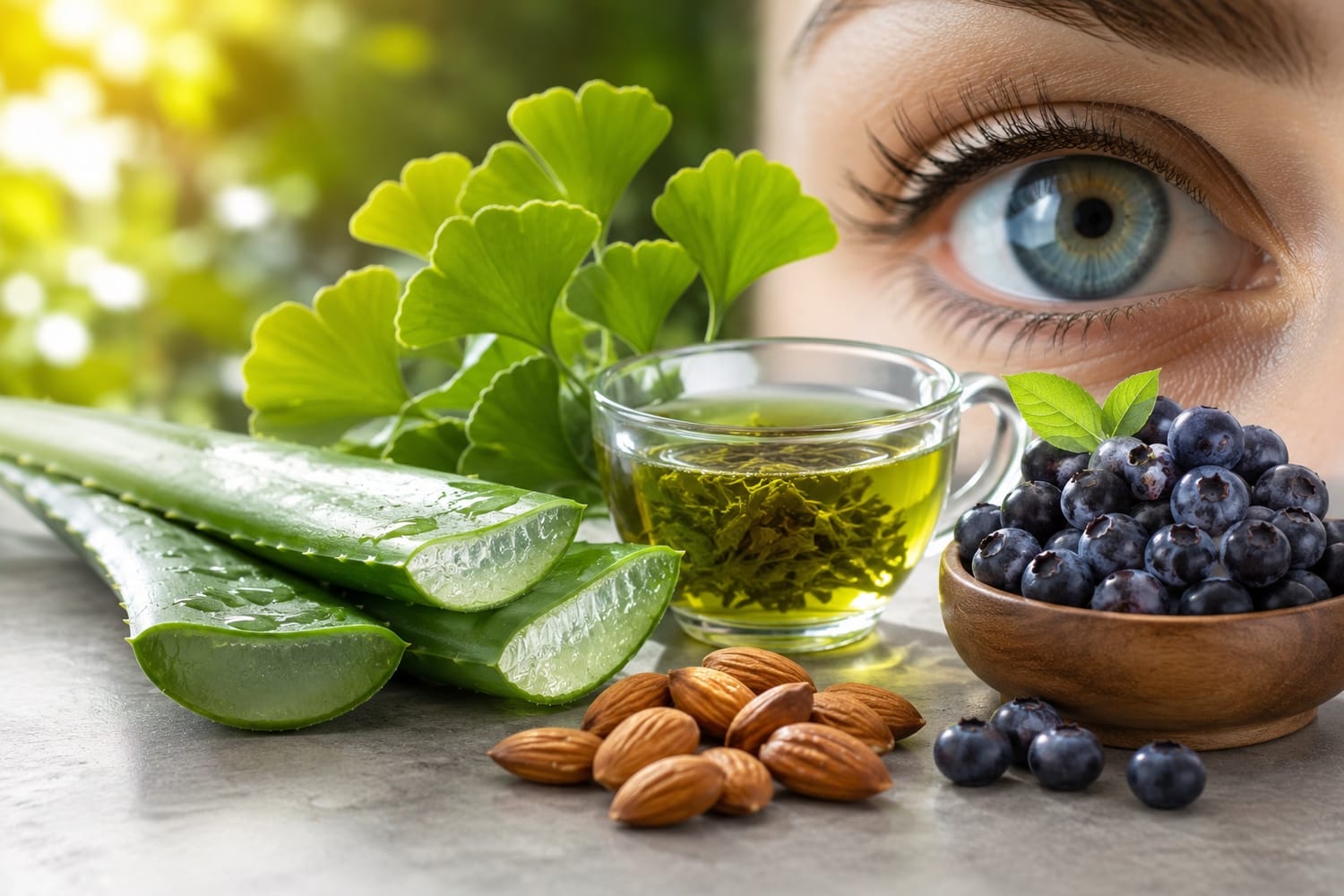
In the video below, we explore five popular natural approaches that have been associated with eye health: aloe vera, ginkgo biloba, green tea, bilberries, and almonds.
The goal isn't to promise a miracle cure. Instead, it's to look at why these ingredients have attracted attention and how you can incorporate eye-friendly foods into an overall healthy lifestyle.

Can You Improve Your Eyesight Naturally?
The idea of improving eyesight without glasses is appealing, especially for people who experience blurry vision, eye fatigue, or difficulty focusing.
However, it's important to distinguish supporting eye health from correcting a refractive error.
Nearsightedness, farsightedness, and astigmatism are related to the way light focuses within the eye. Foods and supplements aren't proven to permanently reshape the eye or eliminate the need for corrective lenses.
That doesn't mean nutrition is unimportant.
Your eyes require a variety of nutrients to function properly, and maintaining a balanced diet can be an important part of protecting long-term eye health.
The five ingredients discussed in the video offer an interesting starting point.
1. Can Aloe Vera Really Help Your Eyes? Here's What the Research Says

If you've scrolled through a skincare aisle lately, you've probably noticed aloe vera showing up in everything from sunburn gels to under-eye creams. It's been used as a folk remedy for burns and irritated skin for centuries, thanks to the nutrient-rich gel found inside its leaves. But does it actually do anything useful around the delicate skin near your eyes — or even for eye health itself? Here's a quick, evidence-based rundown.
What's actually in aloe vera?
The clear gel inside an aloe leaf is packed with vitamins (A, C, and E), minerals like zinc and selenium, amino acids, and enzymes. Several of these compounds are antioxidants, meaning they may help neutralize the free radicals that damage skin cells over time. Aloe also contains fatty acids and enzymes thought to calm inflammation, along with compounds that may have mild antifungal and antibacterial effects.
Benefits around the eyes
People commonly reach for aloe vera to:
Soothe puffiness or swelling
Calm redness and irritation
Moisturize dry, flaky skin
Ease sunburned skin
The moisturizing effect comes largely from aloe's water and enzyme content, while its antioxidants and fatty acids are thought to support the skin's natural repair process. Used correctly — as a thin layer on the outside of the eyelid, never directly in the eye — it's generally considered a safe, gentle option for this sensitive area.
What about dry eyes specifically?
This is where things get more interesting scientifically. A 2012 laboratory study published in Pharmaceutical Biology tested aloe vera extracts on human corneal cells. Researchers found that ethanol and ethyl acetate extracts of aloe reduced production of nitric oxide and several inflammatory cytokines (including IL-1β, IL-6, and TNF-α) in these cells, without causing measurable toxicity at the concentrations tested. The ethyl acetate extract also showed a notable free-radical-scavenging effect.
Based on these results, the study's authors suggested that aloe vera extracts could potentially be developed into eye drops for treating inflammation affecting the outer structures of the eye, such as the cornea. It's a promising early signal — but it's important to note this was a cell-culture (in vitro) study, not a clinical trial in actual patients, so it shows biological potential rather than proven treatment.
The safety line to remember
Despite that research pointing toward eye drops as a future possibility, off-the-shelf aloe vera gel is not meant to go directly into your eyes today. Doing so can cause burning, redness, and irritation. The safe way to use it is on the skin around your eyes — patting a thin layer onto clean, dry skin, avoiding the lash line, and rinsing it off after 10–15 minutes if you're targeting sunburn or inflammation. As a moisturizer, it can simply be left to absorb.
As with any new skincare ingredient, it's worth doing a patch test on your inner wrist first, and checking with a healthcare provider if you're using steroid creams in the same area or have known sensitivities (aloe is related to garlic and onions, so cross-reactivity is possible).
Bottom line
Aloe vera won't fix every eye-area concern, and it's not a substitute for actual eye care when you have persistent dryness or irritation. But the combination of long-standing traditional use and early lab evidence — like the 2012 corneal cell study — suggests it's a reasonably safe, natural option for soothing puffy, dry, or sunburned skin around the eyes, as long as you keep it away from the eyes themselves.
Sources: Healthline, "Aloe Vera for Eyes: Benefits and How to Use"; Woźniak, A., & Paduch, R. (2012). Aloe vera extract activity on human corneal cells. Pharmaceutical Biology, 50(2), 147–154.
2. Ginkgo Biloba and Eye Health: What the Research Really Shows

Ginkgo biloba has been used in traditional medicine for centuries, and in recent decades it has become one of the most studied herbal extracts for circulatory and neurological health. A growing body of clinical research has also looked specifically at its effects on the eyes — particularly the optic nerve and the macula. Here's a quick, evidence-based look at what the science says.
Why Ginkgo Might Matter for the Eyes
Ginkgo leaves contain flavonoids and terpenoids (including ginkgolides and bilobalide) that act as antioxidants and mild vasodilators. In theory, this combination could help the eye in two ways: by improving blood flow to tissues that are highly sensitive to oxygen and nutrient supply, and by reducing oxidative stress in cells like retinal ganglion cells and the retinal pigment epithelium, both of which are implicated in glaucoma and macular degeneration.
What the Studies Show
Optic nerve and glaucoma. The most frequently cited trial is a 2003 randomized, placebo-controlled crossover study in Ophthalmology, in which 27 patients with normal-tension glaucoma took 120 mg/day of ginkgo biloba extract for four weeks. The ginkgo group showed a statistically significant improvement in visual field indices compared with placebo, while no such improvement occurred after placebo treatment. A later long-term study (over roughly 12 years of follow-up) found that patients on ginkgo biloba extract had a slower rate of visual field progression than would otherwise be expected, though this was a retrospective, uncontrolled analysis rather than a randomized trial. Reviews of the broader literature generally describe ginkgo as a promising adjunct for normal-tension glaucoma — not a substitute for intraocular-pressure-lowering treatment.
Macular health. Evidence here is more mixed. A German double-blind trial gave 99 patients with age-related macular degeneration (AMD) either 240 mg/day or 60 mg/day of ginkgo extract for six months; both groups showed measurable improvements in visual acuity, with the higher dose showing a somewhat larger effect. A much smaller French trial (10 patients) also reported improved visual acuity after ginkgo treatment. However, a Cochrane systematic review of these trials concluded that, because of small sample sizes and study limitations, the evidence isn't yet strong enough to say definitively whether ginkgo slows AMD progression — more rigorous trials are needed.
Ocular blood flow. Separate research has shown that ginkgo biloba extract can increase blood flow velocity in the eye's vasculature, which is the proposed mechanism behind its effects on both the optic nerve and the retina.
Beyond the Eyes
Ginkgo's reputation extends well past ophthalmology. It's widely studied for cardiovascular circulation — reducing platelet aggregation and blood viscosity — and as an adjunctive option for cognitive support in age-related decline and Alzheimer's disease. Large trials and meta-analyses have generally found standardized ginkgo extracts to be well tolerated, with mild headache or gastrointestinal upset as the most common side effects, and without the elevated bleeding risk once feared.
One safety note: this research applies to standardized extracts made from ginkgo leaves. The tree's fruit and seeds contain a separate toxin (ginkgotoxin) and should not be confused with leaf-derived supplements.
The Bottom Line
The research on ginkgo biloba and eye health is genuinely interesting but still emerging. For optic nerve stress in normal-tension glaucoma, several small trials point toward a modest, adjunctive benefit alongside standard pressure-lowering care. For macular degeneration, early results are encouraging but not yet conclusive. As with any supplement, it's worth discussing with an eye care professional before adding it to a regimen — especially if other medications or eye conditions are involved.
3. Green Tea and Eye Health: A Sip Worth Taking

Most people reach for green tea for its calming ritual or its reputation as a heart-healthy habit. But there's a lesser-known benefit brewing in every cup: it may actually be good for your eyes.
The Antioxidant Connection
Green tea is rich in catechins, a group of plant compounds with strong antioxidant properties. The most studied of these, EGCG (epigallocatechin gallate), has been shown in research to reach eye tissues after consumption, where it may help neutralize free radicals — the unstable molecules linked to age-related eye damage.
What the Research Suggests
Protection against oxidative stress: The retina is especially vulnerable to oxidative damage due to its high oxygen consumption and constant light exposure. Catechins may help offset this stress over time.
Potential role in glaucoma and cataract prevention: Some studies suggest antioxidants like those in green tea could support eye pressure regulation and lens clarity, though more human trials are needed to confirm long-term protective effects.
Reduced eye fatigue: The modest caffeine and L-theanine combination in green tea may support alertness and reduce the strain associated with prolonged screen time — a relevant perk in our digital-heavy lives.
A Simple Addition, Not a Cure
It's worth being clear: green tea isn't a treatment for eye disease, and it won't replace regular eye exams or a doctor's care. But as part of a broader diet rich in leafy greens, omega-3s, and vitamin-rich produce, it's a small, pleasant habit that may support long-term eye health.
The Takeaway
A daily cup of green tea won't work miracles, but its antioxidant profile makes it a smart, low-effort addition to an eye-friendly lifestyle. Pair it with good screen habits, proper lighting, and regular checkups, and you're giving your eyes a well-rounded chance to stay healthy for years to come.

4. Bilberries and Eye Health: What the Evidence Actually Says

If you've ever seen a bilberry supplement, chances are it came with a story attached: British Royal Air Force pilots in World War II supposedly ate bilberry jam before night missions and reported sharper night vision. It's a great origin story — the problem is there's no documented military record backing it up, and when researchers have tested the night-vision claim in controlled trials, it hasn't held up.
So what are bilberries?
Bilberries (Vaccinium myrtillus) are small, dark purple berries closely related to blueberries, native to the woodlands of Europe, Western Asia, and parts of North America. They're packed with anthocyanins — the pigments responsible for their deep color — which are potent antioxidants. Anthocyanins are the main reason bilberries have been studied for eye and circulatory health in the first place.
What the research supports
The evidence is genuinely mixed, and it's worth being honest about that rather than repeating supplement-aisle marketing:
Night vision: Not supported. A well-known systematic review of placebo-controlled trials found no meaningful improvement in night vision from bilberry, despite this being its most famous claim.
Eye fatigue / dry eye: There's some early, modest evidence here. A few small studies have found bilberry extract may ease symptoms of eye strain from screen use, and a small pilot study combining bilberry with fish oil showed improvement in dry eye symptoms — but the studies are small and preliminary.
Retinal blood flow: Anthocyanins appear to support the small blood vessels that supply the retina, which is why researchers have looked at bilberry for conditions like diabetic retinopathy. Some animal and early human research is promising, but it's not yet strong enough to call this a proven benefit.
The bottom line
Bilberry isn't a miracle vision fix, and it won't give you better night vision. But it's a legitimate source of antioxidants that may offer modest support for eye comfort and circulation — more of a supporting player than a headline act. If you're looking for eye-health nutrients with a stronger evidence base, lutein and zeaxanthin (found in leafy greens and eggs) have considerably more research behind them.
5. Almonds and Eyesight: What the Science Actually Says
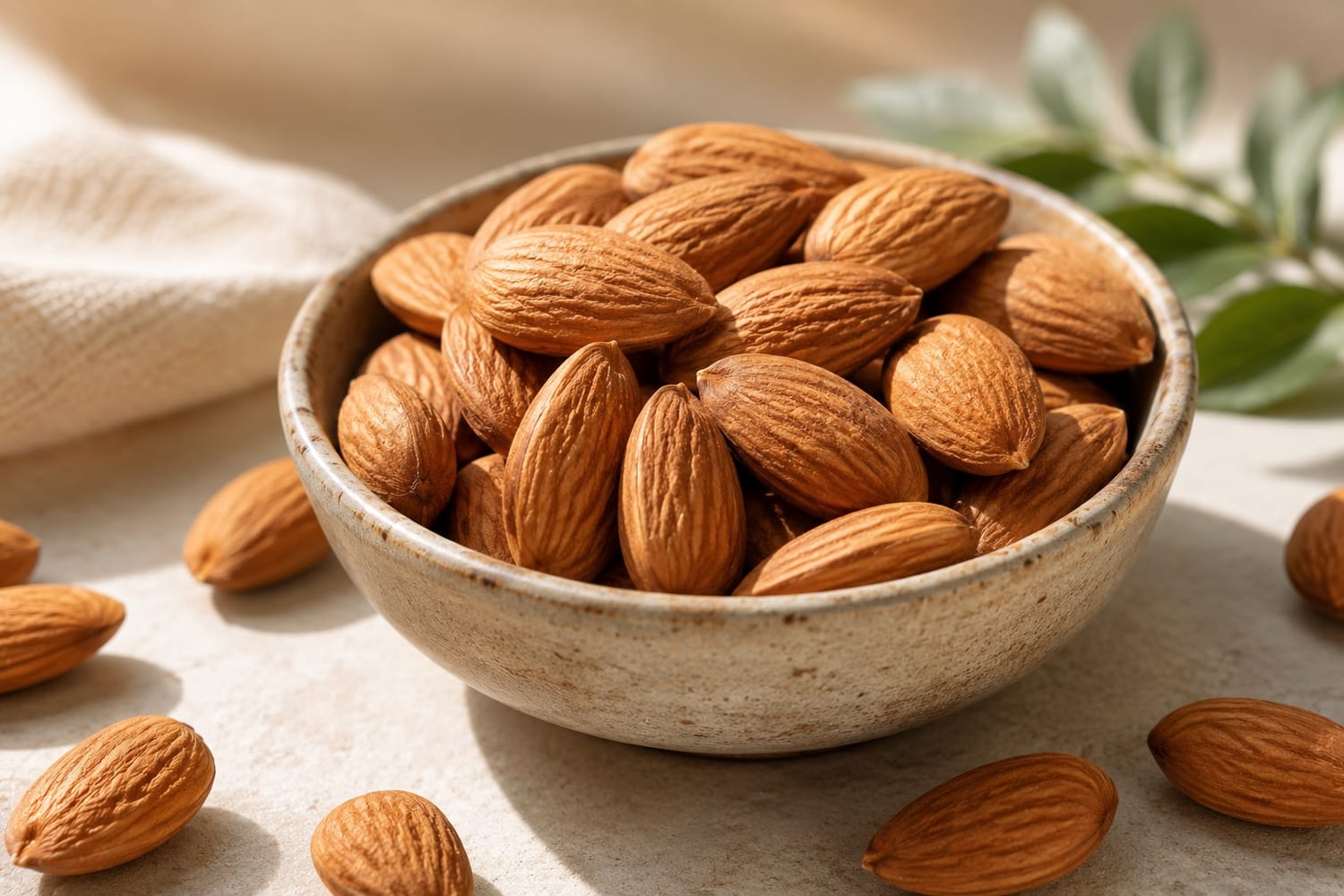
Almonds have a reputation as a "brain food" and, by extension, an eye-health food. Scroll through enough wellness content and you'll find claims that a handful of almonds a day can sharpen your vision. The truth is more modest — but still worth knowing.
What's actually in almonds
Almonds are one of the richest common food sources of vitamin E, an antioxidant that helps protect cells throughout the body, including the light-sensitive cells in the retina, from oxidative stress. A one-ounce serving (about 23 almonds) provides roughly half of the daily recommended intake of vitamin E.
They also contain:
Riboflavin (vitamin B2) — involved in maintaining healthy mucous membranes, including those in the eyes
Zinc — plays a role in transporting vitamin A from the liver to the retina
Healthy fats — support the absorption of fat-soluble vitamins like A and E
The eyesight connection
Vitamin E's main claim to fame in eye health comes from research on age-related macular degeneration (AMD). Some large studies, including the AREDS (Age-Related Eye Disease Study) trial, found that a combination of antioxidants — vitamin E, vitamin C, zinc, copper, and carotenoids — could slow the progression of AMD in people who already had intermediate or advanced stages of the disease.
It's important to be precise here: this evidence is about slowing disease progression in an at-risk population, not about improving vision or eyesight in a general, healthy population. There's no solid clinical evidence that eating almonds will sharpen your eyesight, reduce your need for glasses, or prevent nearsightedness.
Where almonds fit in
Rather than a magic fix, almonds are best thought of as one small contributor to a broader pattern of eating that supports long-term eye health — alongside leafy greens (lutein and zeaxanthin), fatty fish (omega-3s), citrus fruits (vitamin C), and carrots or sweet potatoes (vitamin A precursors).
The bottom line
Almonds won't give you superhero vision, but their vitamin E and zinc content make them a genuinely useful part of a diet that supports eye health over time — especially as a defense against age-related decline rather than a boost to everyday eyesight. Pair them with a varied, nutrient-rich diet, regular eye exams, and good habits like UV protection and screen breaks for the best results.
Other Ways to Protect Your Eyes
Nutrition is only one piece of the picture.
If you want to support your eyesight and long-term eye health, consider these everyday habits.
Give your eyes regular breaks from screens
Long periods of screen use can contribute to digital eye strain, dryness, headaches, and temporary difficulty focusing.
Try following the 20-20-20 approach: approximately every 20 minutes, look at something about 20 feet away for at least 20 seconds.
Wear UV-protective sunglasses
Long-term exposure to ultraviolet radiation can contribute to certain eye problems.
When you're outside during bright conditions, sunglasses that provide appropriate UV protection can help reduce exposure.
Eat a colorful diet
Instead of searching for one “miracle” food, build meals around a variety of nutrient-rich ingredients.
Consider including:
Leafy green vegetables
Colorful fruits
Nuts and seeds
Eggs
Fatty fish
Beans and legumes
Whole grains
Stay physically active
Regular physical activity supports cardiovascular and metabolic health, which can also contribute to overall eye health.
Don't skip eye examinations
Regular comprehensive eye exams can identify vision changes and detect certain eye conditions before noticeable symptoms appear.
That's particularly important because some eye diseases can develop gradually without obvious warning signs.
Can Food Really Improve Your Eyesight?
This is one of the most important questions to answer.
Food can support the health and normal function of your eyes, but there is no single food proven to restore normal vision or permanently eliminate the need for glasses.
If your vision is blurry because of a refractive error, you may still need glasses, contacts, or another form of vision correction.
However, maintaining good nutrition and healthy habits can give your eyes the nutrients and environment they need to function properly.
Think of it as supporting your eyes rather than trying to “cure” your eyesight with one ingredient.
5 Eye-Friendly Foods to Add to Your Diet
If you're looking for a simple place to start, consider these everyday foods:
🥬 1. Leafy Greens
Spinach, kale, and other dark leafy greens contain nutrients such as lutein and zeaxanthin that are associated with eye health.
🐟 2. Fatty Fish
Salmon, sardines, and other oily fish provide omega-3 fatty acids.
🥚 3. Eggs
Eggs provide several nutrients that can be part of an eye-friendly diet.
🫐 4. Berries
Blueberries, strawberries, raspberries, and blackberries provide fiber and antioxidant compounds.
🌰 5. Almonds
Almonds provide vitamin E, healthy fats, and protein.
The key isn't eating enormous amounts of any single food. Variety and consistency matter more.
When Should You See an Eye Doctor?
Natural approaches should never delay professional evaluation when you're experiencing changes in your vision.
Contact an eye-care professional if you experience:
Sudden vision loss
New flashes of light
A sudden increase in floaters
A dark curtain or shadow across your vision
Persistent blurry vision
Eye pain
Significant changes in your eyesight
Difficulty seeing at night that is getting worse
Sudden changes in vision can sometimes require urgent medical attention.

Frequently Asked Questions
Can you improve eyesight without glasses?
Healthy nutrition and lifestyle habits can support eye health, but there is no reliable evidence that eating particular foods will permanently correct refractive errors and eliminate the need for glasses.
What foods are good for eye health?
A varied diet containing leafy greens, colorful fruits and vegetables, nuts, seeds, eggs, and omega-3-rich fish can provide nutrients important for eye health.
Are almonds good for your eyes?
Almonds provide vitamin E and other nutrients that can contribute to a balanced, eye-friendly diet. They shouldn't be considered a treatment for vision problems.
Does green tea improve eyesight?
Green tea contains antioxidant compounds that make it an interesting part of a healthy diet. However, drinking green tea isn't proven to correct vision or replace treatment for eye disease.
Are bilberries good for eyesight?
Bilberries contain anthocyanins and other plant compounds. They've been studied in relation to eye health, but evidence doesn't support treating bilberries as a guaranteed way to improve or restore eyesight.
Can aloe vera improve eyesight?
Aloe vera has been used traditionally in a variety of wellness applications, but it shouldn't be relied upon as a proven treatment for impaired vision.
Should I stop wearing my glasses if I eat these foods?
No. Don't stop using prescribed glasses or contacts based on dietary advice. If your prescription or vision changes, speak with an eye-care professional.
Final Thoughts
The idea of improving eyesight naturally is appealing, but the healthiest approach is to separate eye-health support from claims of a miracle cure.
A nutritious diet containing antioxidant-rich fruits and vegetables, healthy fats, nuts, and other whole foods can help provide your body with important nutrients.
The five ingredients discussed — aloe vera, ginkgo biloba, green tea, bilberries, and almonds — are interesting examples of foods and traditional ingredients that have attracted attention for their potential relationship with eye health.
But there's no need to search for one magical ingredient.
Focus instead on the bigger picture: eat a varied diet, protect your eyes from excessive UV exposure, take regular screen breaks, stay active, and keep up with routine eye examinations.
Your eyesight is too important to leave to a single home remedy.
Medical Disclaimer
The information provided in this article is for general educational and informational purposes only. It is not intended to diagnose, treat, cure, or prevent any disease or medical condition and should not be considered medical advice.
Do not stop wearing prescribed glasses or contacts, discontinue medication, or delay professional eye care based on information presented in this article or video. Always consult a qualified healthcare professional or eye-care provider regarding changes in your vision, supplements, medications, or other health concerns.
NATURAL HEALTHIER YOU
Simple, practical health and weight-loss guidance for real life.
Natural Healthier You. All rights reserved. Content is for general informational purposes only and is not medical advice. Consult your healthcare provider before starting any diet or supplement. Some links on this site are affiliate links; we may earn a commission at no extra cost to you.