Free: 30 calorie-cutting recipes + a 7-day plan → Get the guide




Starting Over to Lose Weight? Focus on These 3 Simple Things First

By Matthew & the Natural Healthier You team
If you've ever told yourself, “Okay, this time I'm really going to get serious about losing weight,” you probably know what happens next.
You start thinking about everything you need to change.
Maybe you decide you're going to completely overhaul your diet.
No more takeout.
No more desserts.
No more snacking.
Maybe you download a meal plan, buy a bunch of foods you've never eaten before, and promise yourself you're going to start exercising five days a week.
For the first few days, everything feels great.
You're motivated.
You're focused.
You're ready for a fresh start.
And then... real life happens.
You have a busy day. You're tired. You eat something that wasn't part of the plan. Maybe you skip a workout.
And suddenly, that little voice in your head says:
“Well, I already messed up. I might as well start again Monday.”
Sound familiar?
I've been thinking about this because if I were starting over and wanted to lose some weight, I wouldn't try to completely change my life overnight.
I wouldn't throw out everything in my kitchen.
And I definitely wouldn't tell myself that I could never eat my favorite foods again. 😅
I'd start with something much simpler.
I'd focus on three things that are realistic enough to keep doing—even when life isn't perfect.
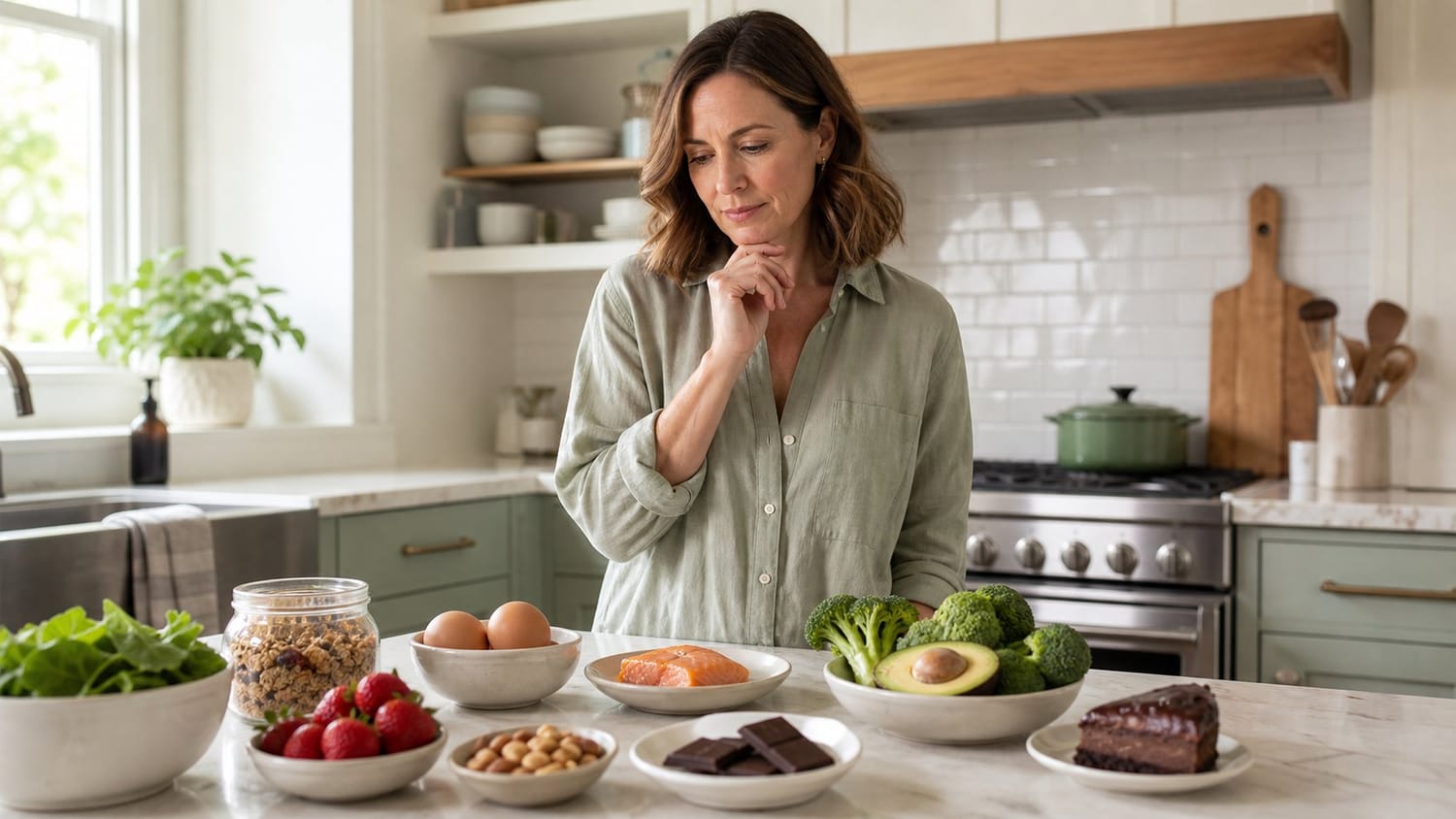
Starting over doesn't mean throwing everything out and becoming a different person.
Why "Starting Over" Doesn't Have to Mean Starting From Scratch
One of the biggest problems with traditional dieting is the idea that you need to become a completely different person to get results.
You're supposed to eat perfectly.
Exercise consistently.
Avoid certain foods.
Track everything.
Never have an indulgent meal.
And somehow maintain all of that indefinitely.
That's a pretty big ask.
And when the plan is too restrictive or complicated, it's easy to fall into an all-or-nothing mindset.
You either followed the plan...
...or you didn't.
You either had a “good” day...
...or you had a “bad” day.
But healthy habits don't really work that way.
A single meal doesn't determine your progress.
One missed workout doesn't erase everything you've done.
And eating your favorite food doesn't mean you've failed.
What matters much more is what you do most of the time.
That's why I like thinking about weight management in terms of small decisions that can be repeated.
Instead of asking:
“How can I completely change my diet?”
Try asking:
“What could I do today that would make eating healthier a little easier?”
That small shift can make the entire process feel more manageable.
Here are three places I'd start.
1. Make Your Meals More Filling
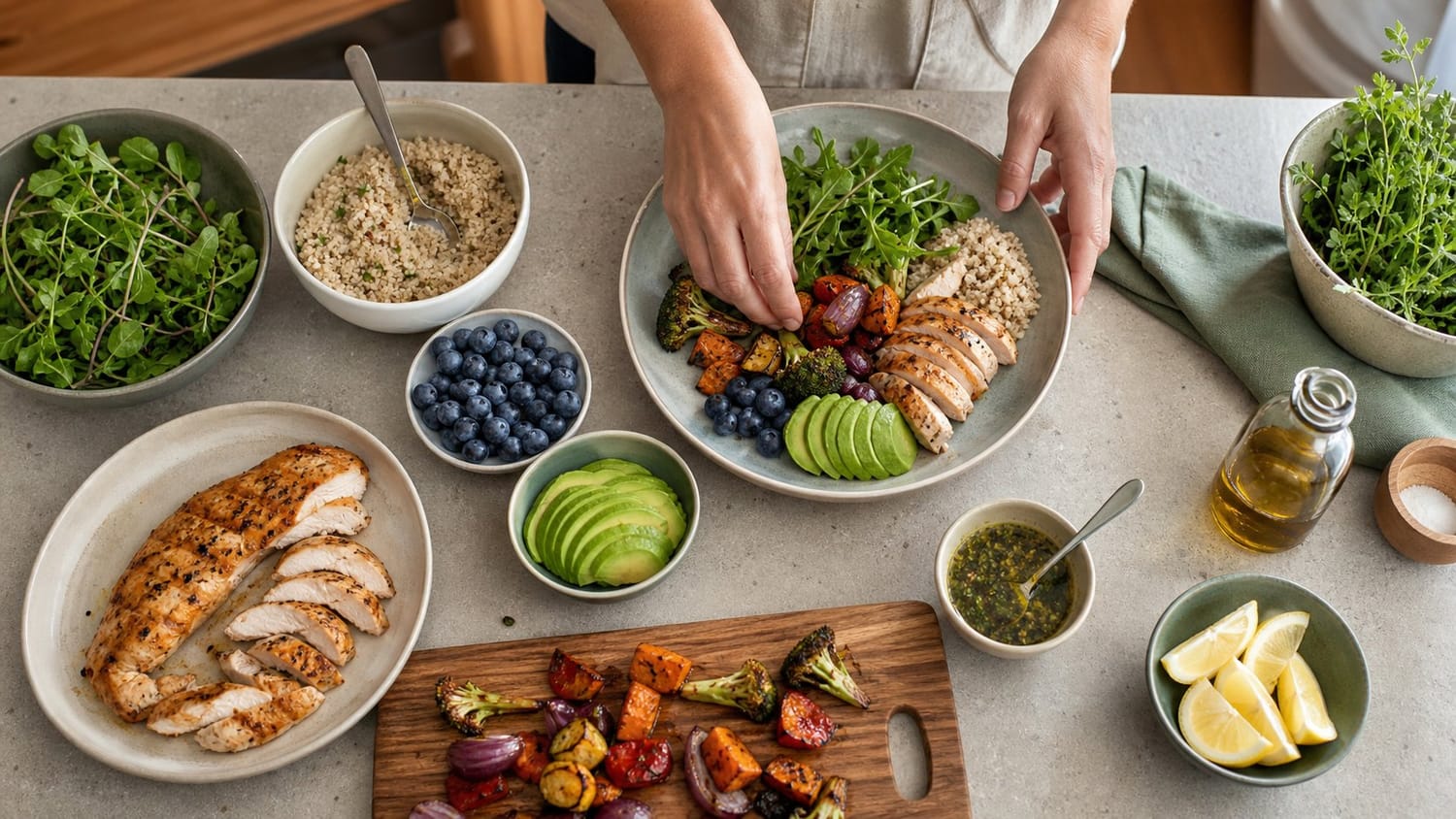
Think about what you can add to your meals — not just what to take away.
When people think about losing weight, one of the first things that comes to mind is usually eating less.
And while overall calorie intake matters for weight loss, simply telling yourself to “eat less” isn't always the easiest strategy to stick with.
If you're constantly hungry, you're fighting your appetite all day.
Instead, I'd start by thinking about what you can add to your meals.
Start with protein
Protein is one of the most useful building blocks to consider when putting together satisfying meals.
Foods such as eggs, Greek yogurt, chicken, turkey, fish, lean meats, beans, lentils, cottage cheese, tofu, and other protein-rich foods can help make a meal more substantial.
Protein also plays an important role in maintaining muscle, which is especially valuable when you're trying to lose body weight.
You don't need to make every meal complicated.
Breakfast could be eggs with whole-grain toast and fruit.
Lunch might be a chicken and vegetable bowl.
Dinner could be salmon, roasted vegetables, and a serving of potatoes or brown rice.
Simple doesn't mean boring.
Add more vegetables and other high-fiber foods
Another easy way to make meals more satisfying is to include more vegetables and other fiber-rich foods.
Think:
Broccoli
Green beans
Spinach
Peppers
Carrots
Brussels sprouts
Tomatoes
Berries
Apples
Beans
Lentils
Whole grains
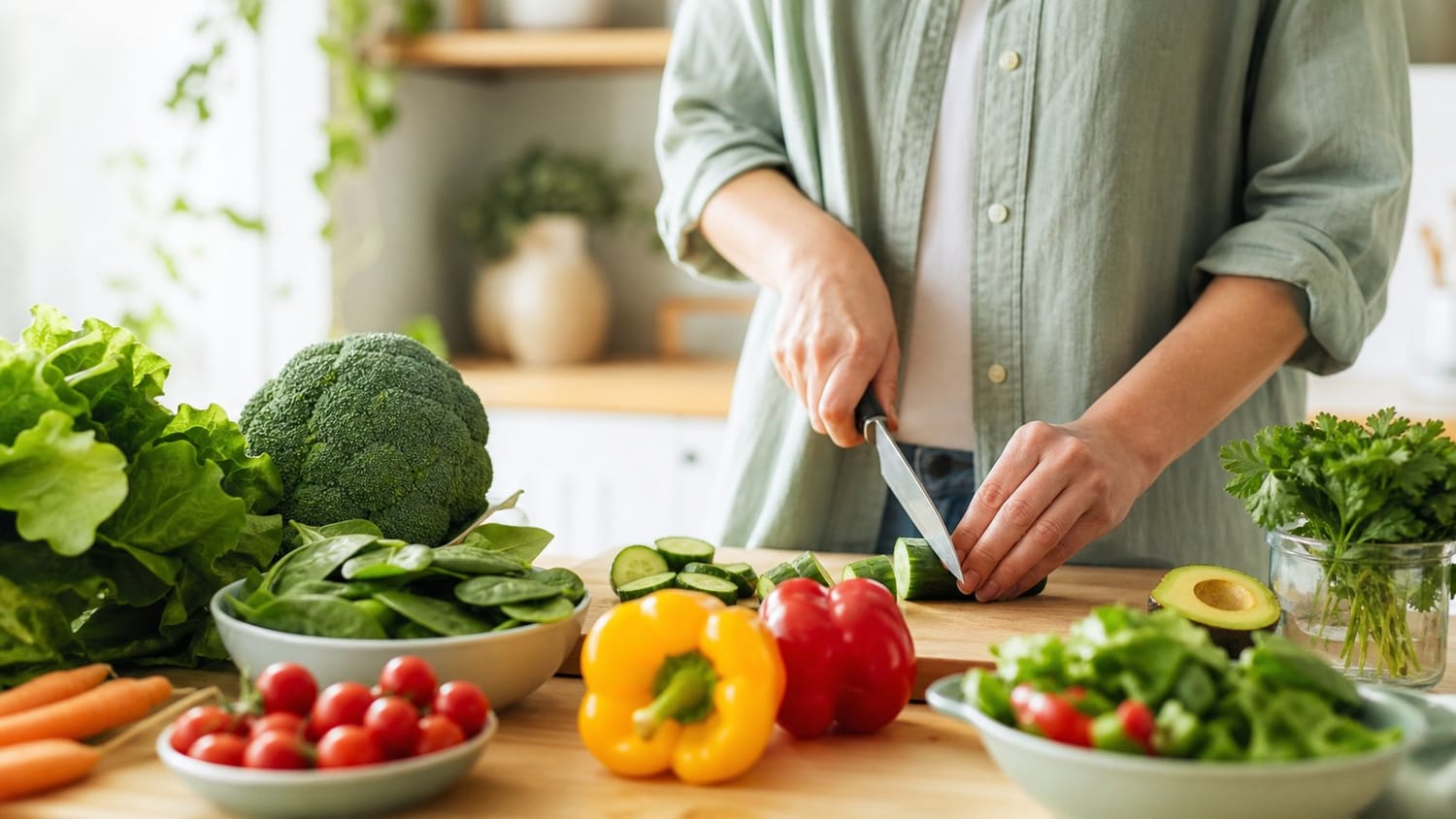
Add vegetables to foods you already enjoy — no giant salads required.
These foods can add volume, texture, nutrients, and fiber without requiring your meals to become enormous calorie bombs.
And you don't necessarily need to eat a giant salad at every meal.
Try adding vegetables to foods you already enjoy.
Put spinach and peppers into your eggs.
Add vegetables to pasta.
Throw some broccoli into a stir-fry.
Add berries to yogurt.
Make roasted vegetables as a side dish.
The goal isn't to create a perfect diet.
It's to gradually make your normal meals more nutritious and satisfying.
Choose minimally processed foods more often
This doesn't mean you have to eliminate processed foods.
That's neither realistic nor necessary for most people.
Instead, think about the overall pattern of your diet.
Could you occasionally replace a highly processed snack with fruit and Greek yogurt?
Could you make a simple meal at home instead of ordering takeout?
Could you choose a whole-grain option instead of a refined one?
Could you add beans, vegetables, or lean protein to a meal?
Small substitutions can add up.
A simple way to build a meal
One approach I like is to think about your plate in broad categories:
Protein + vegetables or fruit + a source of carbohydrates or whole grains + a little healthy fat.
You don't need to measure everything perfectly.
You don't need to weigh every ingredient.
And you don't need to eat the exact same foods every day.
Think of it as a framework rather than a strict rulebook.
The goal is to build meals that leave you feeling satisfied instead of constantly thinking about your next snack.
2. Get a Little More Movement

Your body doesn't know whether you're on a treadmill or walking around your neighborhood.
The second thing I'd focus on isn't spending hours in the gym.
It's simply moving more throughout the day.
There's a tendency to think exercise only counts if you're wearing workout clothes and sweating in a gym.
But your body doesn't know whether you're walking on a treadmill or walking around your neighborhood.
Movement is movement.
And small amounts can be much easier to incorporate into a normal day.
Look for opportunities to move
Maybe you take the stairs instead of the elevator.
Park a little farther away.
Take a short walk after lunch.
Stand up and stretch periodically if you've been sitting at your desk.
Walk while you're talking on the phone.
Do some yard work.
Play outside with your kids.
Take the dog around the block.
None of these things has to feel like a formal workout.
And that's part of the point.
If the only movement you consider “exercise” is a 60-minute gym session, you're creating a pretty high barrier to entry.
But if your definition of movement is broader, suddenly there are opportunities everywhere.
Walking is a great place to start
If you haven't been exercising consistently, walking can be an incredibly simple starting point.
You don't need expensive equipment.
You don't need a gym membership.
And you can usually adjust the pace and duration to your current fitness level.
You might start with a 10-minute walk.
Then 15.
Then 20.
Maybe eventually you enjoy taking a longer walk several times a week.
The important part isn't winning some imaginary competition against yourself.
It's creating a routine that you can actually maintain.
Consistency beats the perfect workout you never do.
Don't underestimate everyday movement
There's also something important about increasing movement throughout the day rather than relying entirely on one workout.
For example, imagine someone sits for most of the day but goes to the gym for 45 minutes.
That's certainly better than doing nothing.
But what if that person also looked for ways to move during the other hours of the day?
A short walk in the morning.
Standing up regularly.
Walking during a phone call.
Taking the stairs.
A walk after dinner.
Those small choices can become part of a lifestyle rather than something that has to be scheduled as a separate event.
Again, the goal isn't perfection.
It's finding ways to make being active feel normal.
3. Make the Next Choice a Good One
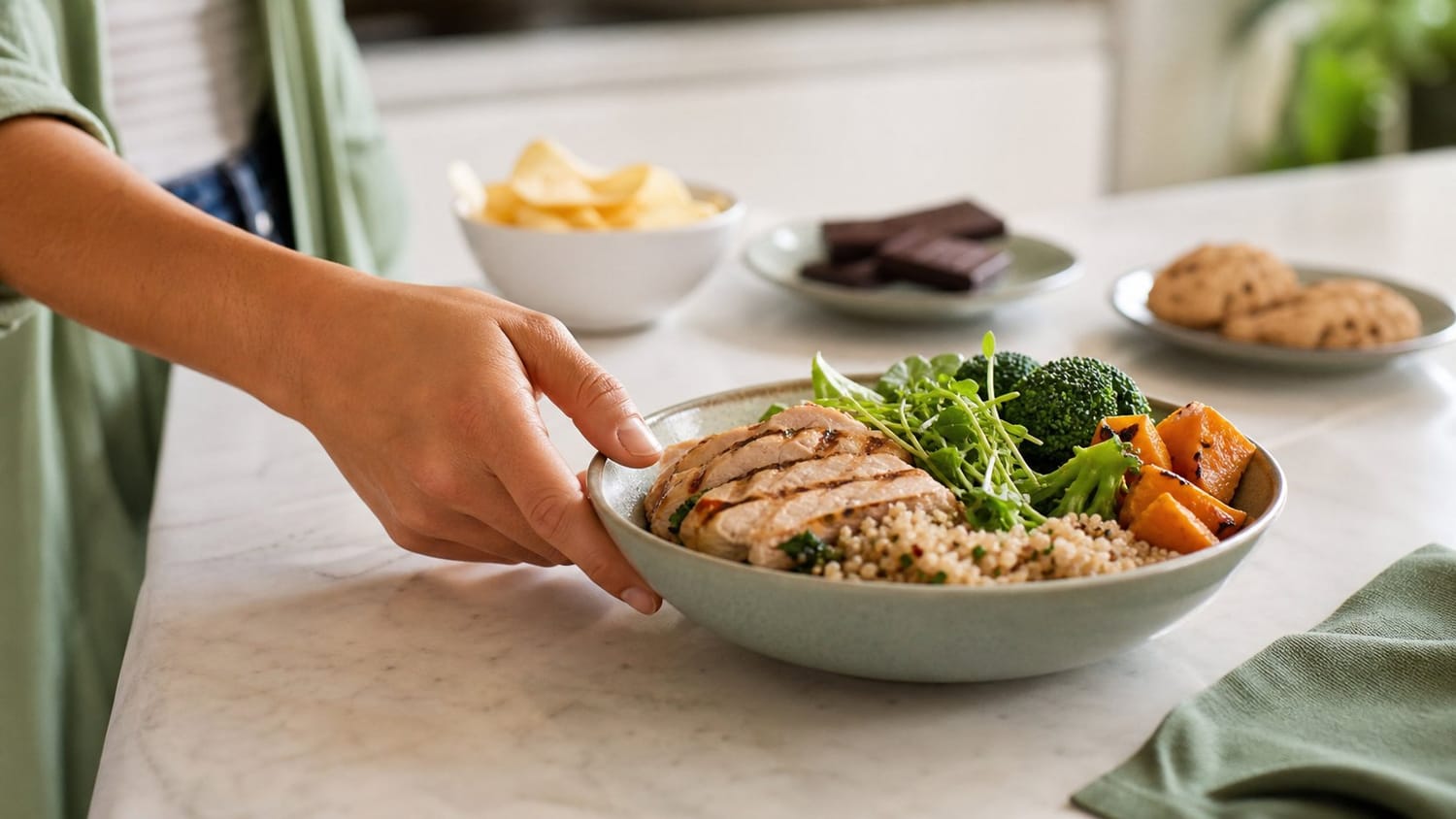
Your next choice is always the one that matters most.
This might be the most important idea of all.
Because even if you improve your meals and become more active, there will still be days when things don't go according to plan.
That's normal.
Maybe you go out to dinner.
Maybe you have birthday cake.
Maybe you order pizza.
Maybe you eat more than you intended.
Maybe you don't exercise because your day gets completely away from you.
What happens next matters.
And this is where the “next choice” mindset can be incredibly useful.
Don't turn one choice into an entire day
Imagine you have a breakfast that isn't particularly healthy.
It's easy to think:
“Well, I already messed up today.”
Then lunch becomes another unhealthy meal.
And maybe you snack throughout the afternoon.
By dinner, you're thinking:
“I'll just start over Monday.”
One meal has now turned into an entire weekend.
But what if you handled it differently?
You simply said:
“That wasn't the best choice. My next meal can be better.”
That's it.
No guilt.
No punishment.
No starving yourself to make up for it.
No waiting until Monday.
Just your next choice.
This way of thinking takes away a tremendous amount of unnecessary pressure.
Forget the "All or Nothing" Mindset
A lot of people don't struggle because they don't know what healthy foods are.
They struggle because they believe they have to do everything perfectly.
But imagine if you applied that same thinking to other areas of life.
If you missed one day of work, would you decide to stop going altogether?
If you forgot to brush your teeth one night, would you say, “Well, I guess I'll never brush them again”?
Of course not.
You simply continue with the next opportunity.
Healthy habits can work the same way.
You don't have to be perfect.
You just need to keep returning to the habits you're trying to build.
Your next meal is always another opportunity
Had a heavier lunch?
Make dinner a little more balanced.
Had dessert?
Enjoy it and move on.
Missed your morning walk?
Take one tomorrow.
Ate out?
Make your next meal at home.
You don't have to “earn” your way back into healthy habits.
You simply continue.
That's a much more sustainable mindset than constantly feeling like you're starting over.
What About Your Favorite Foods?
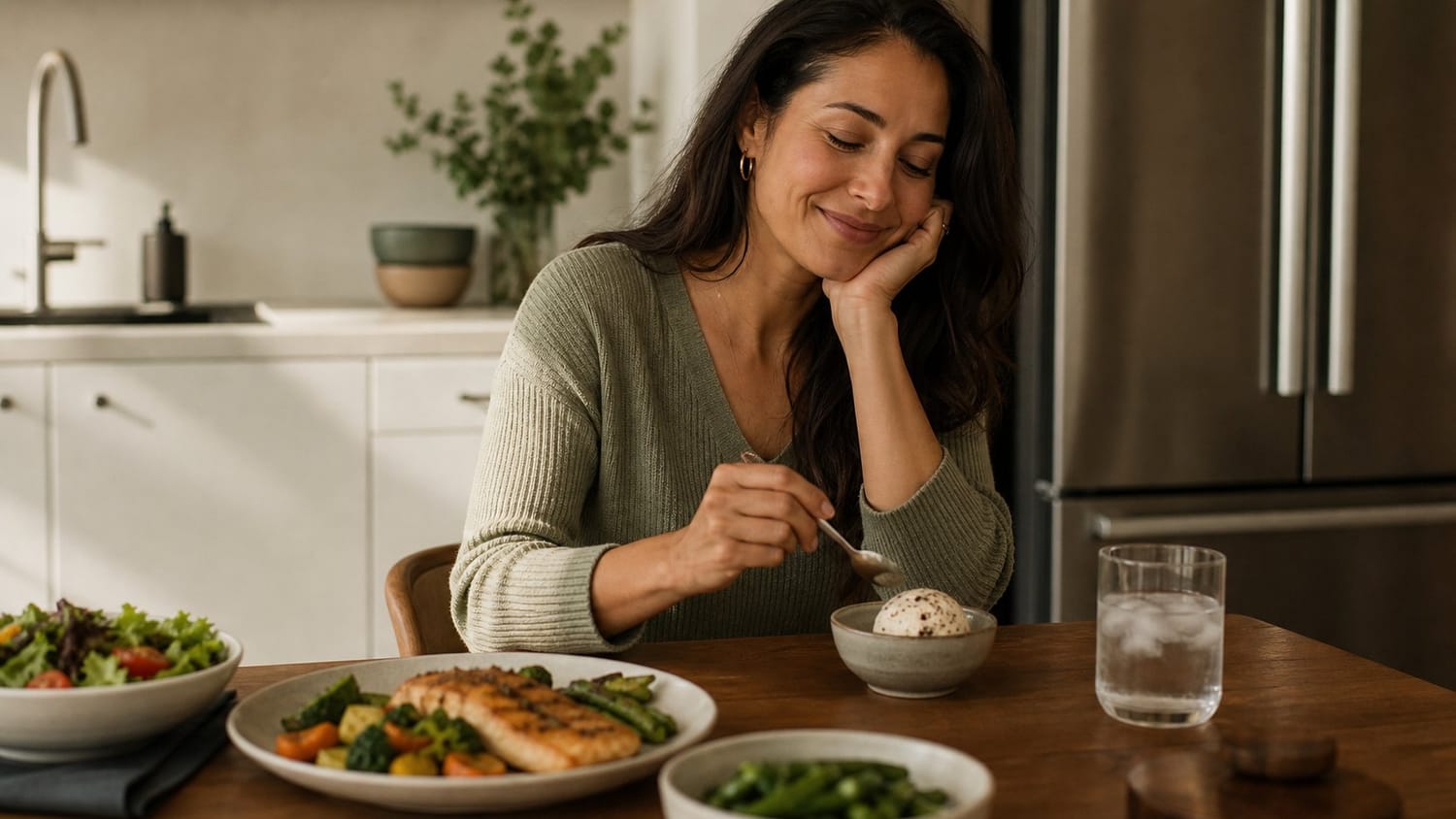
Healthy eating doesn't have to mean never enjoying your favorite foods again.
Here's another idea I think gets overlooked.
You don't necessarily have to give up the foods you love.
If your weight-loss plan requires you to permanently eliminate every food you enjoy, ask yourself how realistic that is.
Could you really imagine never eating pizza again?
Never having ice cream?
Never going out to dinner?
Never having birthday cake?
For most people, probably not.
And that's okay.
A healthier approach can involve learning how to fit enjoyable foods into an overall pattern of eating that supports your goals.
Maybe you have a smaller portion.
Maybe you enjoy your favorite dessert occasionally.
Maybe you balance a richer meal with lighter meals elsewhere in the day.
Maybe you simply become more intentional about when and how often you have certain foods.
The point isn't to create a life where you never enjoy food.
The point is to create habits that you can live with.
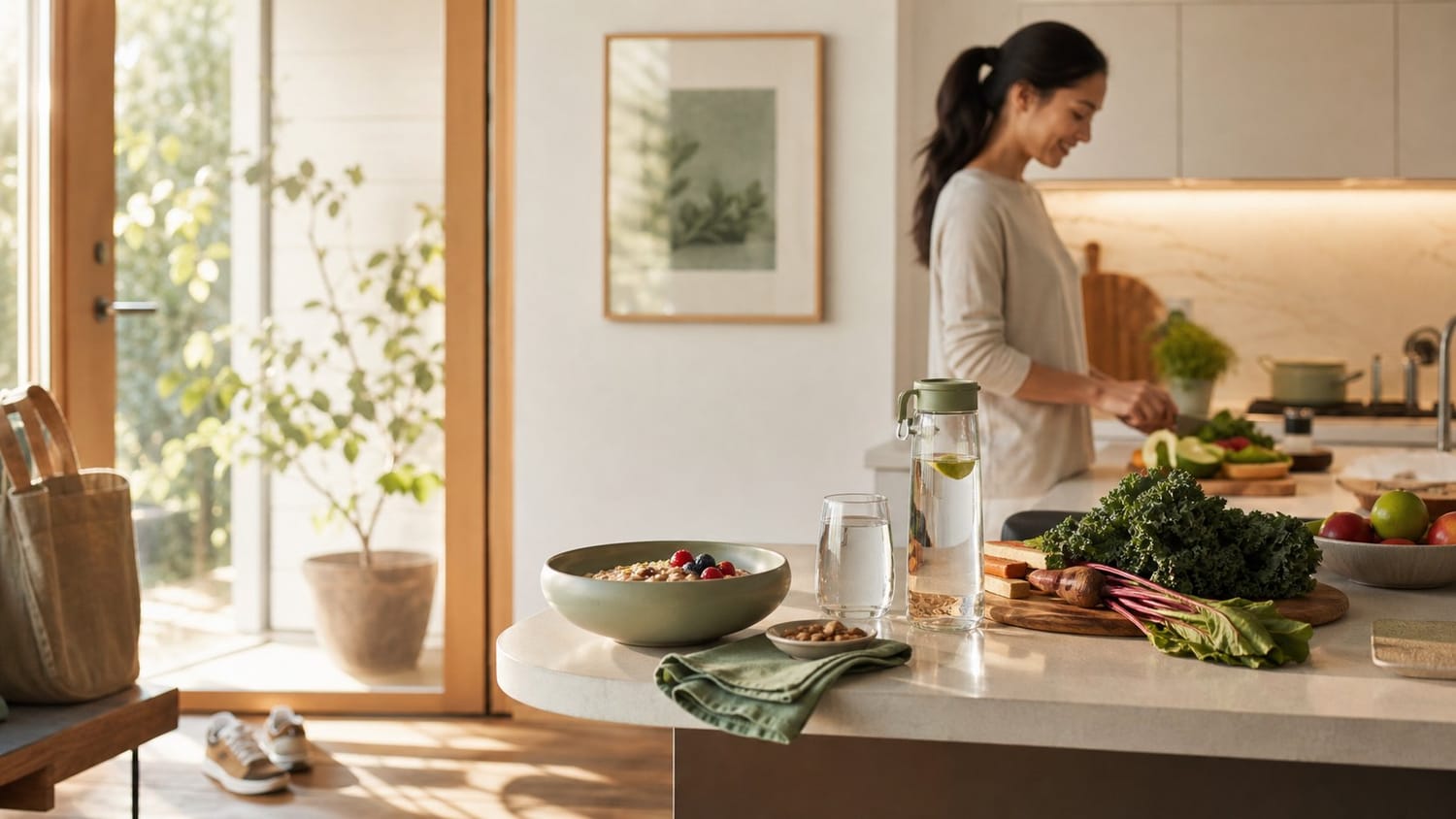
Small, repeatable habits gradually change what your normal day looks like.
Small Changes Are Easier to Repeat
There's a reason I'm drawn to simple strategies.
Because a strategy doesn't help much if it's too complicated to maintain.
Think about two different approaches.
Approach A:
“I'll completely change my diet, work out six days a week, eliminate sugar, cook every meal, track every calorie, and never eat anything unhealthy.”
Approach B:
“I'll make my meals more filling, walk a little more, and try to make my next choice better when I get off track.”
Which one sounds easier to maintain for the next six months?
For most people, it's probably the second one.
And that's important because weight management isn't just about what you do for a few weeks.
It's about the habits you can continue building over time.
A Simple Example of What This Could Look Like
Let's say you normally start your day with a pastry and a sugary coffee.
You don't have to completely reinvent breakfast tomorrow.
You could simply make one change.
Maybe add eggs.
Or Greek yogurt.
Or fruit.
Or switch to a less sugary drink.
At lunch, instead of trying to eat the smallest meal possible, you could build something more satisfying with protein, vegetables, and a source of whole-food carbohydrates.
In the afternoon, instead of automatically grabbing a snack, you might take a 10-minute walk first.
And if dinner doesn't go exactly according to plan?
You don't declare the day a failure.
You simply make the next meal a little better.
None of those individual changes sounds dramatic.
That's exactly why they can be useful.
You're not trying to become a different person overnight.
You're gradually changing what your normal day looks like.
And Sometimes a Little Extra Support Helps
There's something else worth mentioning.
Sometimes knowing what to do isn't the hard part.
The hard part is doing it consistently.
That's where additional support can be useful.
For one person, that might be a simple meal plan that removes the daily question of “What am I going to eat?”
For someone else, it might be a collection of healthy recipes.
Someone might prefer tracking their food.
Another person might benefit from an exercise program, an accountability system, or another resource that makes healthy habits easier to follow.
There's no single solution that works for everyone.
That's an important point.
You don't have to find the “perfect” program.
You just want to find tools that fit your lifestyle and make it easier for you to follow through.
And if you've been struggling to stay consistent, it may be worth exploring what's available rather than assuming you simply need more willpower.
A Simple 3-Step Reset You Can Try Today
If you're feeling overwhelmed by everything you think you should be doing, forget about all of it for a moment.
Try this instead.
Step 1: Look at your next meal
Ask yourself:
“What could I add to make this meal more filling and nutritious?”
Maybe it's protein. Maybe it's vegetables. Maybe it's fruit or a whole-food carbohydrate.
Don't worry about perfection. Just improve it.
Step 2: Find 10 minutes to move
Take a walk. Stretch. Climb some stairs. Do some light activity around the house.
Anything that gets you moving counts.
Step 3: Make your next decision a good one
If you make a choice you're not happy with, don't wait until tomorrow. Don't wait until Monday. Don't decide you've ruined everything.
Simply ask: “What's one slightly better choice I can make next?”
Then make it.
The Goal Isn't to Be Perfect
This may be the biggest takeaway I want you to remember.
You don't need to have a perfect day to make progress.
You don't need to eat perfectly.
You don't need to exercise perfectly.
You don't need to avoid every food you enjoy.
And you don't need to completely transform your life overnight.
Instead, focus on the things you can repeat.
Build meals that keep you satisfied.
Move your body a little more.
And when you inevitably have a day that doesn't go according to plan, don't turn one decision into a reason to quit.
Just make your next choice a little better.
Then do it again.
And again.
Over time, those choices can become habits.
And those habits can become part of your normal lifestyle.
One Last Thing

Sustainable healthy living is about enjoying life — one better choice at a time.
If you're starting over right now, I don't want you to think about everything you need to change.
Think about the next choice.
What's your next meal?
Can you make it a little more filling?
Can you add some vegetables?
Can you include a good source of protein?
Can you get outside for a short walk?
Can you drink some water?
Can you choose something today that your future self will appreciate?
You don't have to do everything.
You just have to do something.
And tomorrow, you get another opportunity.
That's a much more encouraging way to approach your health than constantly feeling like you're starting over.
Progress doesn't require perfection.
Sometimes it simply means making the next choice a little better than the last one.
Want a Little Extra Support?
If you're looking for something that can make healthy eating and weight-management habits a little easier, I'm always researching simple resources, meal ideas, guides, and other options worth considering.
There isn't one approach that's right for everyone. But sometimes finding the right resource can give you the structure, ideas, or motivation you need to stay consistent.
As always, do your own research and choose the approach that makes sense for your individual needs and goals.
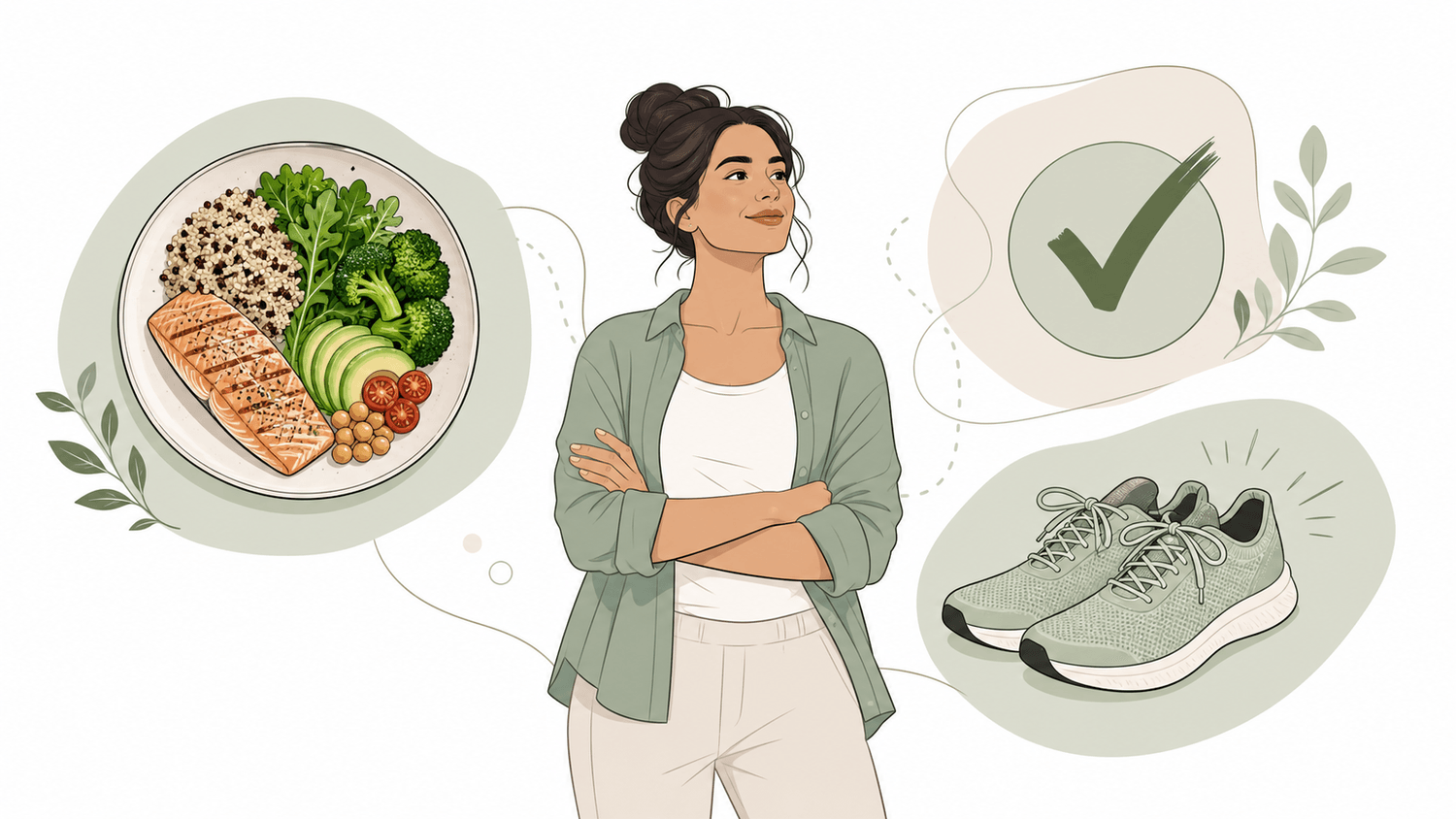
Three simple things: filling meals, more movement, and a better next choice.
Quick Takeaway
Remember these three things:
🥗 Make your meals more filling.
Focus on protein, vegetables, fiber-rich foods, and minimally processed ingredients.
🚶 Get a little more movement.
You don't need to live at the gym. Look for opportunities to move throughout your day.
✅ Make the next choice a good one.
One meal doesn't ruin your progress. Don't wait for Monday—just get back to your routine with your next choice.
You don't have to do everything perfectly. You just have to keep moving in the right direction.
NATURAL HEALTHIER YOU
Simple, practical health and weight-loss guidance for real life.
Natural Healthier You. All rights reserved. Content is for general informational purposes only and is not medical advice. Consult your healthcare provider before starting any diet or supplement. Some links on this site are affiliate links; we may earn a commission at no extra cost to you.